

Futurists Circle Interview: HR’s new mandate in the AI era
As AI reshapes the workplace, organisations are discovering that technology alone may not be the answer.


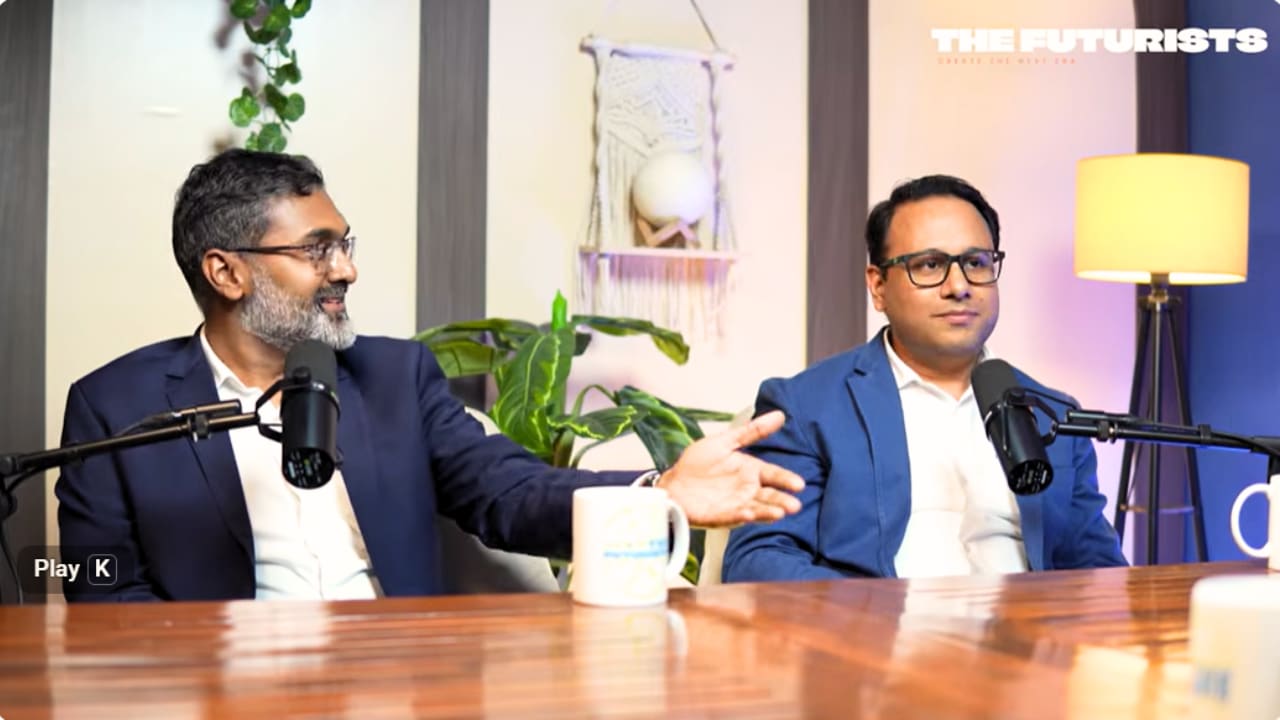
The rapid rise of generative AI has intensified conversations around productivity, automation, and the future of work. But beyond the excitement around tools and systems lies a deeper organisational challenge: how to redesign work, leadership, and decision-making in a world where humans and AI increasingly collaborate.
This was the focus of a recent episode of The Futurists podcast, where Pushkar Bidwai, CEO, People Matters, spoke with Aditya Gupta, Region Head – Southeast Asia, Darwinbox, and Vaibhav Goel, Head of HR (Oil & Gas – E&P) and Senior Vice President, Reliance Industries.
The conversation explored why generative AI represents a foundational technology shift — one comparable to the internal combustion engine, but evolving at a much faster pace. The speakers argued that while organisations continue to approach AI as a technology-led initiative, its real impact will ultimately depend on data quality, workforce readiness, leadership capability, and culture.
AI transformation is becoming a people challenge
A recurring theme throughout the discussion was that AI adoption cannot remain solely an IT agenda. From workforce readiness and capability building to culture and change management, the speakers positioned HR as central to enabling successful transformation.
As transactional work becomes increasingly automated, organisations will need managers who can coach better, make stronger people decisions, and lead teams through continuous change.
Data quality may matter more than AI capability
Poor-quality or fragmented data remains one of the biggest barriers to meaningful AI outcomes. The speakers stressed that without strong governance and reliable organisational data, even the most advanced AI models struggle to create long-term business value.
From process excellence to better people decisions
AI could fundamentally reshape productivity across operational roles, particularly in areas like recruitment and HR operations. As AI administrative and repetitive work reduces, the focus shifts toward improving the quality of hiring, leadership judgement, coaching, and organisational decision-making - areas where human capability becomes even more important.
The rise of human-machine leadership
One of the strongest ideas emerging from the conversation was the concept of “human-machine leadership,” where humans and intelligent systems increasingly collaborate to drive organisational performance.
Rather than replacing people, AI is expected to augment decision-making and free employees to focus on more strategic, creative, and relationship-driven responsibilities.
Why culture and trust still matter most
The leaders reinforced that authenticity, trust, and leadership credibility remain foundational to organisational success.
For organisations navigating large-scale transformation, building cultures that encourage learning, adaptability, and continuous upskilling may ultimately become the real differentiator in the AI era.
Avilasha Sarmah


